
Abraham Lincoln famously quipped that “A House divided against itself, cannot stand”. Though these words were addressed to an 1800s America on the brink of Civil War, their message is applicable all across history: a timeless reminder that fundamental differences between allies can destroy even the most valiant institutions and movements from within.
A poignant example of this is the Spanish Civil War, which raged from 1936 through until 1939, ending just as the rest of Europe erupted into chaos with the outbreak of World War II. Spain, since the exile of its king in 1931, had become a democratic republic: it championed values such as suffrage, divorce, gender equality, and freedom of religion, all of which were controversially progressive issues for a country that even today is still deeply devoted to its traditional Catholic roots. Even these five years, then, were plagued by bitter political battles between the progressive left and the traditionalist right, as well as spats within each camp between those in support of republic and people wanting to tear it down, whether that be Christian monarchists or radical anarchists. This period of tension, subterfuge and backstabbing eventually concluded with the army’s right-wing generals launching an invasion of southern Spain, plunging the country into a Civil War.
The lines of this war were quickly and decisively drawn. There were “Nationalists”, people in support of the rebels’ leader, General Francisco Franco, and his fascist invading forces, and “Republicans”, which were pretty much everyone else: an alliance of everyone from moderates who simply preferred democracy to fascism, to socialists, to all-out anarchists, who just hated Franco more than they disliked the moderate Republic. While this uneasy alliance, borne out of hatred of their shared enemy, lasted about a year, by 1937 in-fighting began: extremists and moderates began to attack each other in the infamous “May days”, leaving the entire alliance vulnerable to the more unified, aggressive and focused Nationalist forces, who took advantage of the chaos to gain the upper hand in the war. The Republicans never recovered, and lost their stronghold of Madrid in March 1939, letting in nearly forty years of brutal dictatorship.
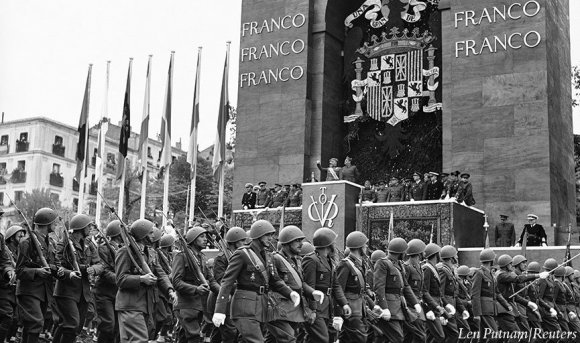
I think there are important lessons we can learn from this example, many of which are particularly relevant in today’s US. The truth is, like the (Spanish) Republicans, the current American Democratic party is an incredibly unlikely alliance: for the past 4 years, it has shown surprising cohesion as the “anything but Donald Trump” wing of the American political spectrum. Trump himself, on the other hand, is no match for Franco’s extremism and brutality—nonetheless, his recent denial of the legitimate results of the 2020 Presidential election only reinforces his long-standing opposition to democracy if it does not work in his favour, much like the 1930s Spanish right wing. And while, like in Spain, this shared enemy of democracy may temporarily unite two disparate viewpoints to oppose it, I think that the party, and President Joe Biden at the head of it, are going to face the mounting challenge of keeping the organisation together as time drags on.

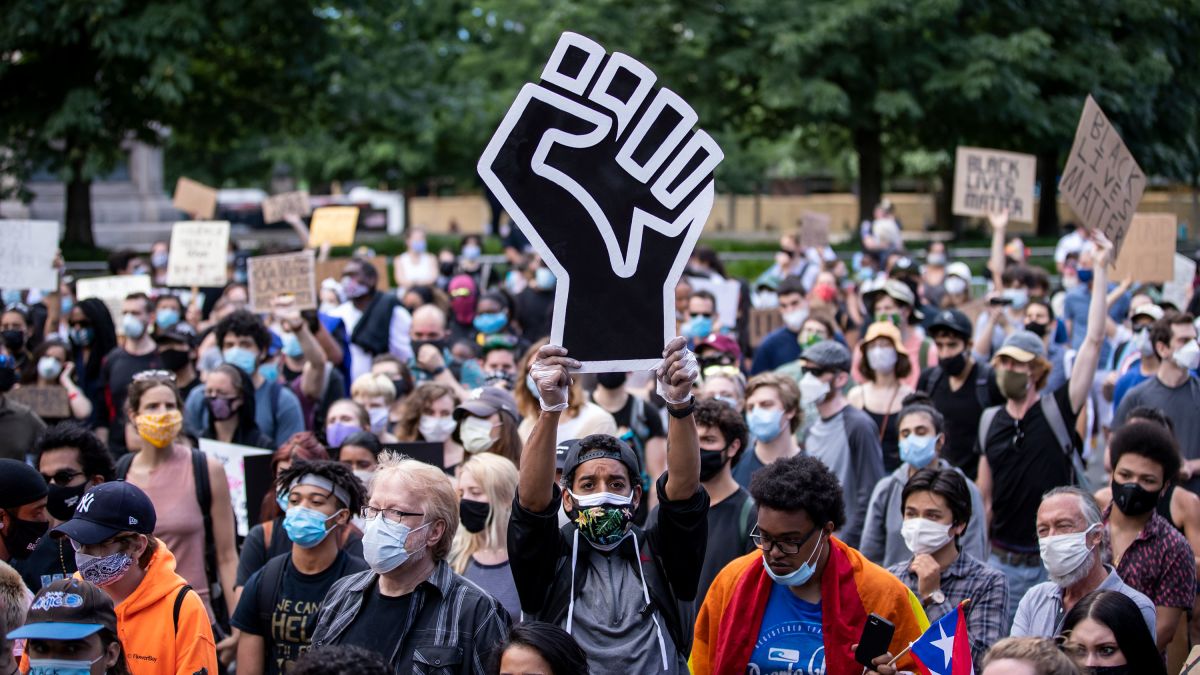
Over 81 million Americans voted for Joe Biden: more than in any other election in the nation’s history. This, in itself, is a staggering figure which only highlights the importance of last year’s election. In the world’s most diverse nation, this group obviously consisted of a wide range of demographics: people of all ages, genders, races and backgrounds stepped up to vote, many for the first time. The victory they achieved was massive both in terms of sheer numbers and significance, and pushed Biden over his first hurdle to become the 46th President of the US. However, it only represented the first of his many challenges: more than anything now, it emphasises the weight of the unique hopes of those millions of individuals, all of which now rest on his shoulders.
Biden has already taken further steps by winning a majority in the US Senate. Unlike the UK, where the Prime Minister is simply appointed by the biggest party in Parliament, which is elected at once, America has separate elections for both the Senate and the House (think of these as almost like the House of Commons and the House of Lords, but both have important powers) as well as an entirely different one for the President, which is what we saw in November. While the approval of all three is needed to pass major legislation, it is possible for a President to have control of only one of these or even to have neither, as Obama faced later on in his Presidency—this means their opponents can stop almost anything they do. The good news is that while the world was watching Trump-supporting extremists storm the Capitol a week ago, the Democrats quietly won two Senate seats back from Republicans in special elections in Georgia, securing (barely) a majority for Biden when he is inaugurated on top of his control of the House; this means the President will actually be able to effectively pass laws through the Houses without the Republicans entirely blocking everything.

However, the battle nowhere near done—the new President still faces the crucial issue of keeping his party together, on top of running a whole country, down the line. Even after the races in Georgia, the Senate will be perfectly split 50-50 (with the Vice-President having the deciding vote): if even one Democrat decides to vote against him, he won’t be able to pass anything into law. In his new autobiography, “A Promised Land” (which I really recommend if you want to learn about American politics; it’s teaching me a lot), Barack Obama highlights the difficulties of this situation. The knife-edge majority grants every Democratic Senator a huge amount of bargaining power, allowing them to force any law Biden tries to pass to change, stopping it in its tracks by voting against it if he doesn’t listen to their demands. This presented huge issues for Obama who, even though he had a bigger majority than Biden does now, had to bend over backwards to ridiculous personal requests in order to pass anything at all, taking huge shortcuts such as extra billion-dollar projects in Louisiana to deliver his landmark healthcare bill, for example. The new President will face all of the same issues that Obama did: even so, I think that the fallout from having to concede to these demands may be greater than ever, effectively threatening to divide the party in two.

The Democratic Party is split between two blocs: “moderates”, who are less harsh right-wingers looking to keep continuity in the US (think UK Tories but mixed with Lib Dems), and “progressives”, who push for greater government investment and change (more like Labour). This important rift, while having been swept under the rug for years in order to deal with Trump, is once again beginning to rear its head now that the Democrats once again have control of government. Biden and his future Vice-President, Kamala Harris, mostly fall into the former camp, while figures such as Bernie Sanders and Alexandria Ocasio-Cortez are more prominent leaders of the latter. Progressives, though, were instrumental in securing Biden’s win—led by Bernie after his defeat and young campaigners on social media, they began a mighty push to “settle for Biden”, throwing their support behind him solely in order to kick out Trump—Biden, too, rose to their demands, for example on cancelling student loan debt, knowing that he had to count on their support to win. And, he has: but now that aim has been achieved, the atmosphere amongst progressives is beginning to change from support to suspicion. Biden’s cabinet nominations are showing many more play-it-safe moderate figures than progressive torchbearers, causing many voters to be disappointed, indicating that there may already be a marked difference between Biden’s agenda and that which many progressives, both voters and politicians, were hoping for. The cracks, then, may already be beginning to show.
What does any of this mean? I am worried that like in 1930s Spain, the differences between the Democrats could spell disaster for them. The fact that any of the fifty Democratic senators could single-handedly stop a law from passing will mean that any of them could make pretty much any request they wanted: but what happens when a moderate makes a demand that progressives don’t like? Or vice versa? Such arguments are bound to happen, and I think they may well tear the party apart, causing either half to entirely veto legislation made by their own official allies. Meanwhile, the Republicans will surely be waiting on the sidelines, spying weaknesses to exploit during future elections in 2022 and 2024. If the Democrats can’t reconcile their differences, I don’t see their grip on power lasting long.
Mark Twain, Lincoln’s contemporary, told us that “History doesn’t repeat itself, but it often rhymes”. The Spanish Civil War was fought over 80 years ago and in entirely different circumstances, but the principles at stake were mostly the same as in modern America: those who are driven to defend democracy pushing back those who are desperate to bend it to their will. And while we might think that if anywhere, democracy is safe in the Land of the Free, the 6th of January taught us that we should take nothing for granted (especially when the police and even the President support the aggressors). Joe Biden may yet face some of the toughest challenges of any President in recent memory: we will all be counting on him to overcome them.

References
Most of this piece was done from my own knowledge, but there are a few articles out there touching on similar themes:
https://www.theguardian.com/us-news/2020/nov/15/democrats-divided-joe-biden-election-party
https://www.nytimes.com/2020/11/09/us/politics/democratic-party-joe-biden.html
https://fivethirtyeight.com/features/the-issues-that-divide-people-within-each-party/
Also, if any of this interested you at all, read A Promised Land. Even if you don’t like Obama (I’m hardly his hugest fan), it offers an illuminating account into American and world politics from someone who was at the centre of it all (and actually knew what was going on, unlike more recent Presidents). Here is a link to it from my favourite independent bookshop here in Edinburgh, because fuck Amazon:
https://lighthousebookshop.com/products/a-promised-land-obama?_pos=1&_sid=c9c3f1d91&_ss=r
Image sources, in order of appearance (all credit goes to their rightful owners):
https://twitter.com/cfr_org/status/714464591384821760
https://www.ocregister.com/2020/11/07/ap-says-joe-biden-has-won-presidential-race-as-trump-continues-challenges/
https://www.wsbtv.com/news/politics/president-elect-biden-congratulates-warnock-ossoff-record-turnout-georgia/4IGI3R3P6FHLXABG3FGD3SP62Q/
https://mattmendelsohnphotography.pic-time.com/art/mattmendelsohnartgallery/5f5283602405c10b4473d61e
https://www.rappler.com/world/us-canada/summary-trump-statements-inviting-supporters-join-rally-united-states-capitol-january-2021


 AB
AB 