
Categories
Featured Politics

Nine common misconceptions about my views on Palestine and anti-Zionism

My Keffiyeh at home. Edinburgh, October 2023.

The past two months have been incredibly difficult, both for my friends linked to the area and politically engaged people in the North Atlantic. I sincerely hope you’re all feeling safe.

However, in that time, I have both engaged in conversations and seen others online in which several things are suggested about me and others who share similar stances which are patently untrue. I thought it appropriate to outline a few of them in order to make my views clear.

NB. I’m not going to hyperlink to all of the facts here, but all are things I’ve previously read and can try and dig up for you if you really want to see them.

1. You don’t care about Palestinians, you just hate Jews, Anti-Zionism is antisemitism, etc.

Let me start by making clear the difference here. When I talk about Jewish people, I mean the ethnic group; when I talk about Zionists, I mean the political movement. The two have a lot of overlap, yes, however not all Jewish people are Zionists, nor are all Zionists Jewish. Look at the millions of Zionists in the West loudly supporting Israel and its actions—many of them are not Jewish. Look at Arthur James Balfour, the creator of the eponymous declaration and thus a critical supporter of Zionism, who was not only not Jewish but was also an avowed antisemite (he referred to them as “alien and even hostile” in 1919). In a political sense, I oppose all of these Zionist individuals and groups, and support the many Jewish people (including my friends in the UK and US, as well as organisers for Jewish Voice for Peace and similar organisations) who share my views.

Equally, I acknowledge and am abhorred by rising antisemitism in the West today, and stand unequivocally with the Jewish community in opposing it. Under no circumstances should they be associated with the actions of Israel, or face hatred or discrimination of any kind.

2. There are genocides and war crimes happening all over the world—why do you only seem to care about Israel and Palestine (heavy implication of antisemitism)?

I care about the others, too—I wrote a piece about the Uighur genocide in China a few years ago, which I largely stand by (though my views on the Falun Gong cult have been emphatically enlightened since). What is important about Palestine is both the speed at which people are dying, as well as the emphatic indifference and outright support of governments that claim to represent me and the values I hold dear towards it. The governments of the UK and US are explicitly allied with Israel, and largely support its military-industrial complex—they have the power to change its policies. Moreover, the UK helped to start this mess in the first place: we have a disproportionate responsibility to help fix it. As citizens, we, too, need to pressure our governments to change their tack before it is too late (if it isn’t already, or wasn’t a month, two months, or several decades ago).

3. When you refer to Israel, do you blame all of the citizens of the country for its government’s actions (heavy implication of antisemitism)?

Okay, this one is honestly a bit weird, but I’ve actually had it thrown at me quite a few times. The answer is obviously not, and I am really not sure where you get that idea from. When I accuse China of genocide, I don’t implicate my Chinese friends in that definition; when I accuse the US or the UK of war crimes in Iraq and Afghanistan, I don’t implicate myself, my friends or, indeed, my own family (several of whom were sent there). I am referring to the states and their government, not the citizens: when I say “Israel”, I mean the state and government of Israel, not the citizens of Israel (or Jewish people anywhere for that matter). I hope that’s clear.

Scaffolding on the Royal Mile. Edinburgh, November 2023.

4. Majority states of other religions and ethnicities exist everywhere—why do you oppose the existence of Israel, the only Jewish one, and not others (heavy implication of antisemitism)?

There is a difference between countries happening to have a majority of one religion largely due to historical and ethnographic reasons, and one which enforces it as a part of government policy (I know it’s not in the constitution, but look seriously at their actions). Israel’s current population is created as part of a campaign to form a gerrymandered ethno-state, and this comes at the direct expense of Palestinians. The easiest example of this direction being enacted is the international Jewish diaspora being given the “right of return” to Israel, but indigenous Palestinians not being allowed to enter at all, even if they were born there. What else could explain this?

In a broader sense, I don’t think that biblical or genetic lineage denotes some sort of rightful claim to a land (because if so, Palestinians have just as much right if not more to the place, and I can claim a swathe of land in Kenya, where humanity is believed to have emerged from, and claim my rightful home is there). However, what I do believe is in free movement, freedom from persecution, and the fact that many Jewish people feel a cultural and religious affinity with the area. For all of those reasons, Jewish people should be allowed a home in Israel/Palestine should they so desire it. But that home cannot be forced to be only for Jewish people at the direct expense of indigenous Palestinians, who have the exact same rights (and are being denied all three by Israel at present).

So, I don’t oppose the right of Jewish people to live in the area at all; what I oppose, however, is the creation of an exclusive and exclusionary Jewish state on land they had no right to take in the first place.

5. Why don’t you care about the hostages (heavy implication of not caring about innocent Jewish people ie. antisemitism)?

To reiterate my stance: the hostages should come home. But two major things need addressing here. Firstly, why aren’t we talking about the thousands of innocent Palestinians held in Israeli jails without charge, in a breach of international law, who have been for years (though there are more now than ever), and who regularly report facing torture while incarcerated? And secondly, you should be asking that of Netanyahu’s government, who have been carpet-bombing Gaza over the past two months despite having no knowledge of where the hostages currently are. I’m not an expert military strategist, but I know enough to be sure that their actions do not indicate a primary desire to get those people home—if it was what they wanted, they wouldn’t put a single extra one of them at risk. Many of the hostages’ families have criticised the Israeli government along the same lines.

6. “From the river to the sea” (and other common cries for Palestinian liberation) call for the eradication of all Jewish people (explicit accusation of antisemitism)!!!

Wording in Politics is tricky, because there will always be someone who attempts to twist what you say the wrong way (as I’ve seen from the responses to my recent article in the DP). To be clear: some of those who use that phrase do truly desire that (just as antisemites such as Balfour wanted to get rid of Jewish people by sending them to Israel). But calls for liberation do not necessarily indicate the negation of the rights of others. To use what is a tired metaphor by this point, “Black Lives Matter” never meant to say that white ones didn’t, too: its point was that black lives were treated as somehow lesser than others. In a similar vein, Israelis are afforded the right to live in freedom across the area (and even illegally in Palestinian territory), whereas Palestinians from East Jerusalem, where they are annexed by Israel but not afforded citizenship, to Gaza, where they have lived under a decades-long blockade and now a brutal siege, are not. Calls for Palestinian liberation are rooted in a desire for them to be able to live freely in their ancestral homeland: that doesn’t mean that Jewish people can’t, too. The original charter of Likud, meanwhile, explicitly calls for the entire area to be under total Jewish control.
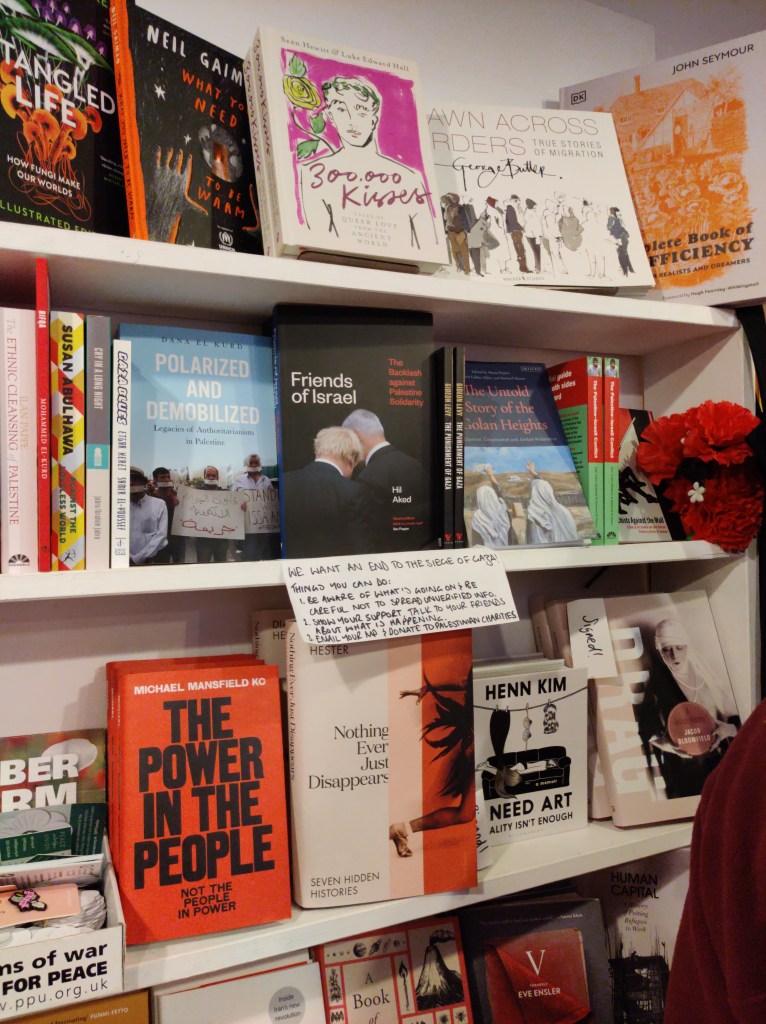
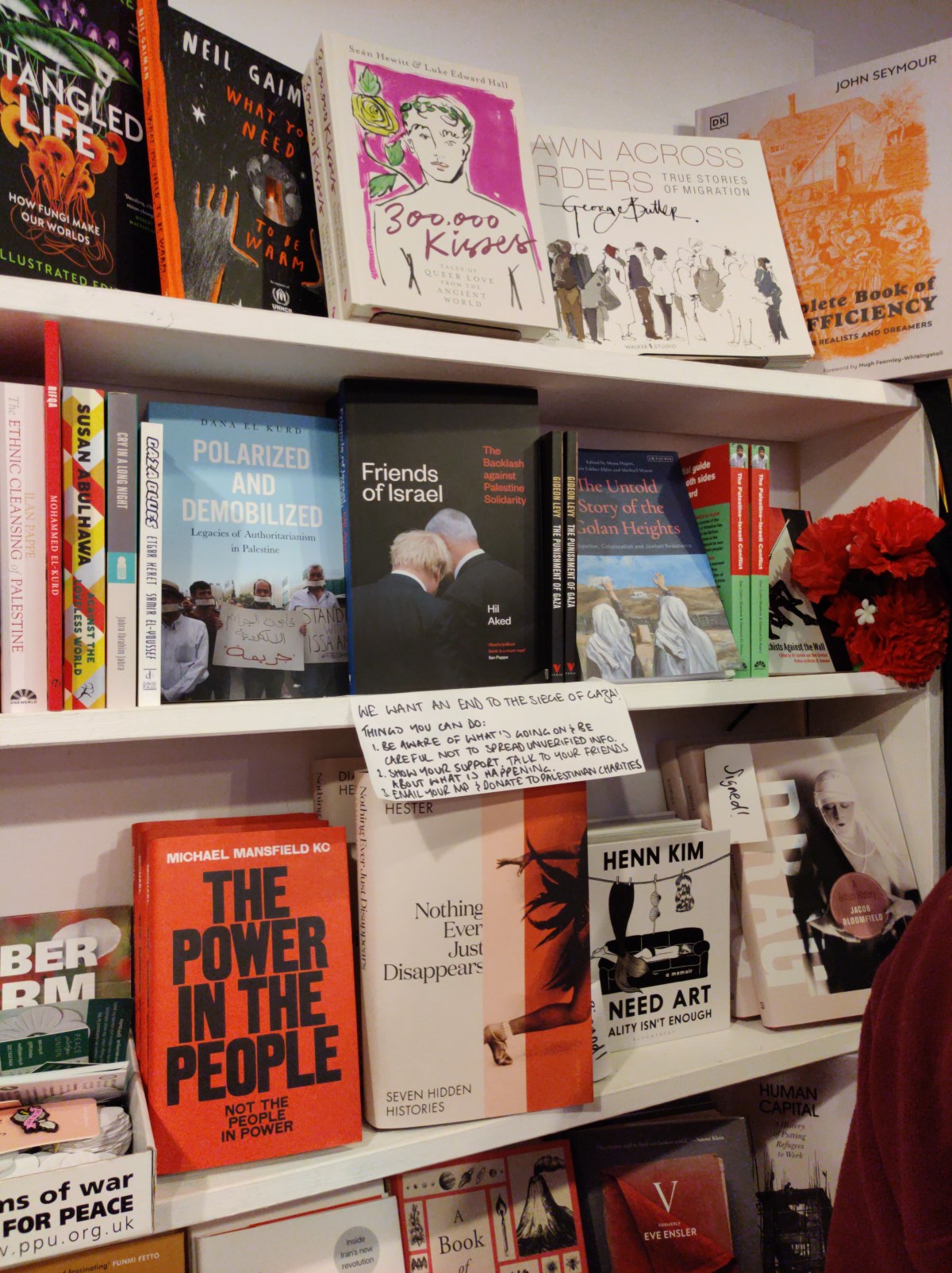
The Lighthouse bookshop. Edinburgh, November 2023.

7. But the Palestinians elected Hamas (implying they deserve this)! Hamas is bad!

Elections last occurred in 2006. Given that almost half of Gaza’s population are children, it’s safe to say that a decided minority of them were able to vote at that point. There is also extensive evidence that Netanyahu’s government has deliberately propped up the organisation for years in a facet of its “divide and conquer” strategy.

I don’t believe in collective punishment (not least because it’s a war crime), and especially not for the actions of a government most of the people did not elect and do nothing to support.

Moreover, Hamas’ violence is not justifiable under any circumstances, but I don’t realistically understand what else you could possibly expect to happen when you limit Gaza’s movement, electricity, food, water, building supplies, etc. while your army can continue to bomb them whenever they want with impunity. It’s a vicious and hugely complex cycle of violence, perpetrated by both sides. However, it’s one that Israel, with its hilariously larger military and financial power as well as its purported democratic values, has the ability and the responsibility to fix. We should hold our allies to a higher standard.

8. Israel is just defending itself (also implying I don’t believe it should be able to)!

I’m sorry, but I can’t take you seriously if you honestly believe that killing 5,500+ children constitutes self-defence. It is, to put it lightly, retaliatory offence. There are other ways of eliminating a threat, such as targeted military raids, that don’t put literal millions of civilians at risk. I grew up in a military family stretching back at least four generations on both sides, and I don’t know a single honourable soldier who wouldn’t risk their own life to save innocent children, no matter where they come from: that’s why they join up in the first place. I wish the Israeli military were the same, rather than explicitly stating the opposite in their policies and actions.

9. This issue is too complex for you to understand: you’re just naïve (and antisemitic) to think you’re informed enough to speak out about it!

I’ve been reading about this issue and following it for several years—I didn’t suddenly start caring on October 7th, and I get my information from academic books and journalists on the ground, not TikTok (as I’ve been accused of doing; I don’t even use TikTok). With that said, I’m nothing even approaching an expert: many parts of it, such as finding an enduring solution to this trauma-embedded and deeply contested area, are indeed incredibly complex. Statespeople of far better standing than I will ever achieve have tried and failed to solve it.

Some things, however, are emphatically black and white: the ones I have attempted to outline here are a few of them.

There is always more to learn about this—on an experiential and academic level, I am far from the most informed on it, and I haven’t covered everything here, but I know enough to tell you that what is going on currently must stop.

I hope you find this useful. Message or email me with any thoughts and responses, and keep having the important conversations with those around you about this. The only way we meaningfully change anything is by uniting together to sway hearts and minds.

Take care of yourselves ❤

—AB, 28/11/23
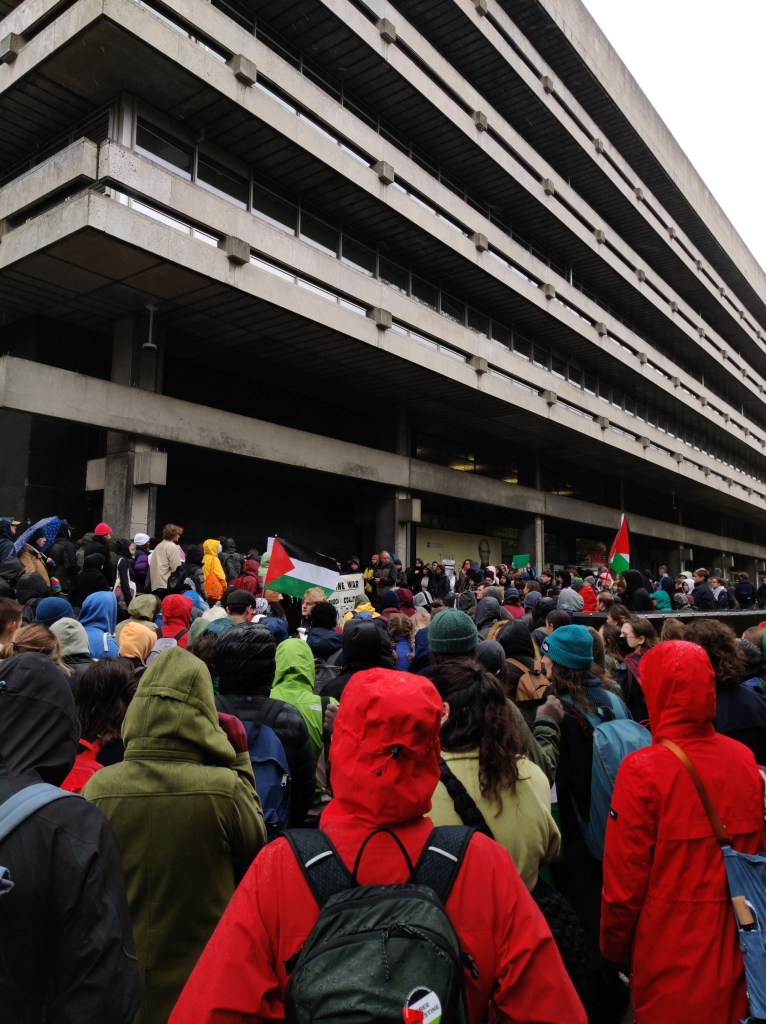
A student-run protest for Palestinian liberation. Edinburgh, October 2023.

All photos used in this article are taken and owned by me.

Categories
Alex Featured

Why I (still) love “Love Actually”

Love Actually seems to be, at this point, a nationwide Christmas tradition. The evenings draw in, the trees and the wreaths and the lights go up, families reunite, and everyone manages to, at some point, get through two hours of festive-ish metropolitan romance (even pushing it into the top 10 on Netflix in the week coming up to the 25th). It’s a film with its fair share of critics and poorly-aged story beats (unnecessary fat jokes, a sprinkle of patriarchy, hints of adultery, an unfortunate lack of diversity especially for a film set in the UK’s least white city), but it remains one that I hold immensely close to my heart.

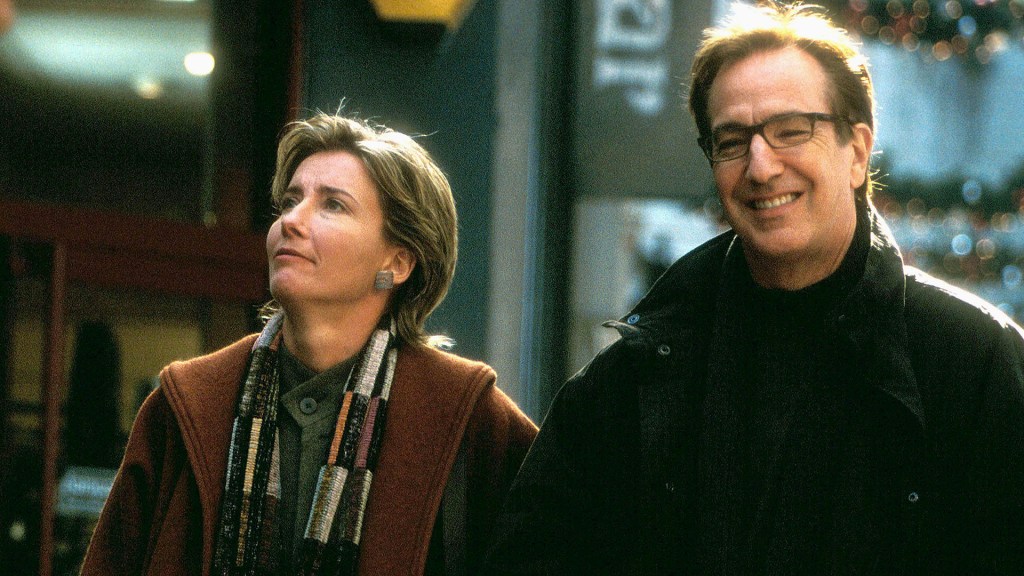
Hugh Grant as Prime Minister David and Martine McCutcheon as common girl Natalie.

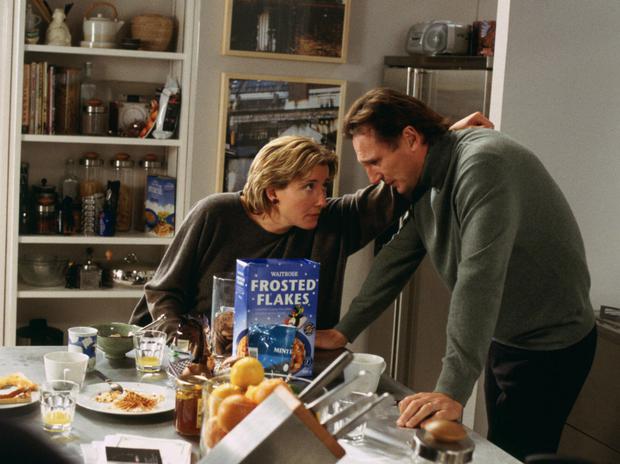
Richard Curtis’ classic is a love letter to London and, to an extent, humanity itself. He masterfully weaves an interconnected series of stories following various residents of the capital, played by what is essentially a who’s-who of British actors at the time, and their pursuit of, well, love. Hugh Grant is a single Prime Minister who falls helplessly (as he so effectively does in most movies he’s in) for his Catering Manager, Liam Neeson is a widower who helps his stepson Thomas Brodie-Sangster (who, fun fact, also voices Ferb) chase his primary school crush, Colin Firth is a writer who, after being cheated on by his wife and running away to France, becomes enamoured with his Portuguese cleaner despite the fact that they understand almost nothing that one another says; the list goes on. Special mention must go to Bill Nighy’s performance as a lewd, aged rocker going for Christmas number one—he is an omnipresent and utterly hysterical presence, marking one of the best outings of one of my favourite actors. As the movie progresses, we slowly see the links between each character grow into a complex web of relationships, adding a sense of unity and connectedness to the whole experience.

Bill Nighy as rockstar and all-around sex icon Billy Mack.

The result is a sort of highlight reel of romance: the first dates, the proposals and the heartbreaks, with the rest of the story having to be left to us to fill in. Love Actually’s wide scope means that unlike most other rom-coms, in which we tend to focus on the exploration and development of one or two relationships, the unlikely couples this movie homes in on get significantly less time and thus tend to be labelled surface-level and incredible by some of Love Actually’s detractors. That’s not how I see it, though: I think its breadth allows the film to cover a whole range of diverse love stories in one tight package. While we aren’t shown the growth of relationships in full, it’s not some compilation of people running into each other, having sex, then suddenly finding happily ever after—although sure, we don’t necessarily see the full build-up of each and every character’s relationships, that doesn’t make them any less believable. Rather than a deep dive into the complications of relationships, then, this film is about expressions of love: I don’t think that comparisons to most other rom-coms really do it justice.

Much like other Curtis screenplays such as Four Weddings and a Funeral, Love Actually’s beauty lies in its honesty. Not all of its stories are perfect—many of them don’t even end happily (which, for a rom-com, is a bold move)—but neither does love in real life. Some explore different types of love to your classic girl-meets-boy: love between friends, siblings, families. The interplay between these and romantic love, often ending in tough and seemingly impossible choices in which our characters have to sacrifice one kind of love for another, leaves us with several bitter, painful and seemingly unjust conclusions interspersed with our feel-good heartwarmers. The thing is, this story doesn’t try to sell you some sort of wildly romantic, intercontinental epic built on impossible coincidences and indescribably instant connections like other seasonal movies might—instead, it tries to provide you a brief window into genuine, human relationships, flawed, raw and dashing though they may be. Yes, there’s cheating and jealousy and death and pain and heartbreak, and the film doesn’t try to hide that from you: those moments of despair are essential elements of its narrative. Above all, though, what Love Actually wants to show us is the scene at its beginning and end, in Arrivals at Heathrow Airport—the joy of seeing those families, friends and loved ones reuniting reminds us that despite all the hardship the world may throw at us, we are all greeted by those same beaming faces once we come home. All of us are loved.

Love, life, isn’t perfect. But that’s what makes it worth living—we need to get through the tough times to reach the good ones. Though Love Actually doesn’t mince its words, its overall message is one of hope: that if we look hard enough, love really is everywhere. Christmas is all about reminding us of that, I think, and few pieces of art are able to express it better. That’s why I come back to it every year—I absolutely adore this film, and I’ll tire of it once I tire of life itself.

For some actual critics who I used as negative references for this piece, look at these:
https://www.vox.com/culture/22189822/love-actually-review-overrated-hugh-grant-liam-neeson-keira-knightley-christmas-holiday-movie
https://www.theatlantic.com/entertainment/archive/2013/12/-em-love-actually-em-still-awful/282273/
https://www.theguardian.com/theobserver/2003/nov/23/features.review137

Image sources in order of use:
https://www.vanityfair.com/hollywood/2019/12/hugh-grant-dance-scene-love-actually
https://www.mirror.co.uk/3am/celebrity-news/bill-nighy-says-love-actually-22103915
https://www.today.com/popculture/emma-thompson-won-t-be-love-actually-sequel-very-sad-t108553
https://www.independent.ie/life/christmas/bairbre-power-ive-only-just-recently-realised-the-hidden-clue-in-love-actually-37642383.html

Categories
Featured Politics

On Sovereignty

The Euros start this week, so I wanted to talk a bit about football, and what it means to the people who support it. Let me start with a sweeping and possibly controversial statement—I genuinely believe that one of humanity’s greatest achievements is the Football World Cup.

It’s a phenomenon that you can’t really put your finger on; for a month or so in the middle of the year, this electric atmosphere buzzes around everyday life as the whole world becomes enthralled in this high-skill, high-stakes stage of a game so simple that almost anyone could play it. The differences between countries are both intensified and nigh-on forgotten as our heroic foot-warriors jostle with, shoot at, dive from, leap over, and blatantly foul each other to the shouts, jumps and cries of the millions watching, proudly bearing the same jerseys as the ones plastered on the big screens. The competitive yet unifying energy of it is something genuinely like no other, and is an incredible feat. I think human progress is at its best when it brings us all together; when done right, that is exactly what the World Cup (and, by extension, the Euros) is about—appreciating and embracing diversity.

But why is this so different to normal club games? After all, it’s the same sport, just with different jerseys, new teams, and a fancy, if sometimes utterly irrational, location (I’m looking at you, Qatar). What changes in the World Cup, though, is this element of national identity; those odd labels that merely represent the place that you’re from, yet somehow have the ability to turn a game of football into a worldwide spectacle. The thing is, nationality isn’t just a passport, or a flag in your Instagram bio; much of the time it is an indicator that we use as the very definition of who we are. There is serious power to that. This sense of identity and belonging is what drives that World Cup fever, I think; rather than looking at any football game and thinking that we could probably do it ourselves, having these players represent our country, and by extension us, on this global stage makes us feel that we really are somehow involved in it—that we are more than mere spectators. This connection is uplifting, captivating and inspiring; international sports simply wouldn’t be the same without it.

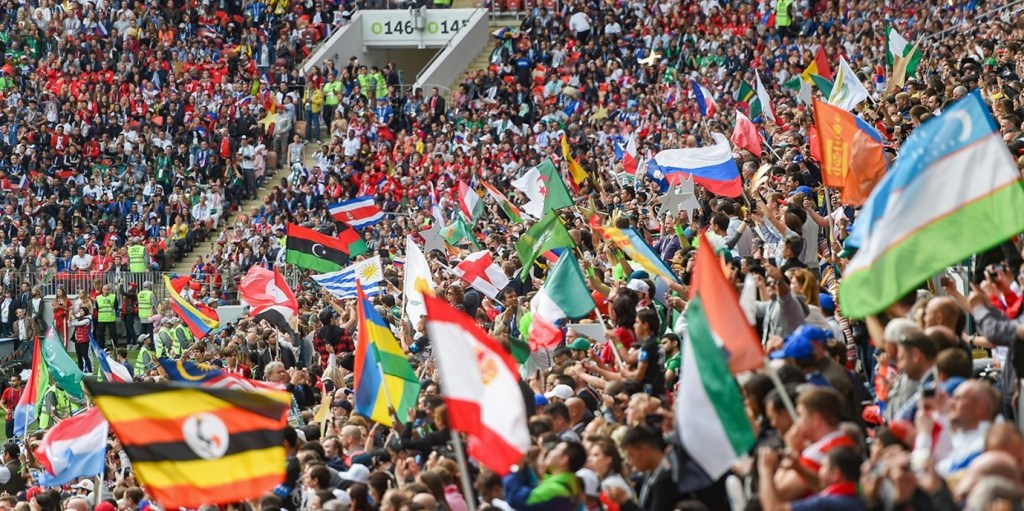
Fans at the 2018 FIFA World Cup. Moscow, July 2018.

The extent that nationality matters to people bleeds pretty heavily into many aspects of life; from sports to immigrant communities down to the very lines along which our country’s borders are drawn. It’s more or less this last aspect that I want to focus on—nationality, and its importance, is something that I think is blindingly obvious yet not appreciated nearly enough in political conversation. Ultimately, it holds a compelling power over people that, when properly harnessed, is almost impossible to convince them away from. This has the power to turn politics from a rational debate to an all-out clash of ideology and identity, with the power to cause war, break apart countries, or both. This has been specifically evident in the UK, with the division of Ireland some hundred years ago and the now hot-button topic of Scottish independence. Nationality plays a central role, I think, in why Scotland wants to be independent in the first place, and why the UK government’s attempts to get rid of the debate won’t work.

People who know me will know full well that I never stop going on about being Scottish; my dad’s family is originally from here, and my parents met in Edinburgh (I qualify for SAAS, alright?). But despite how much I jokingly go on about it, I really am Scottish in name only; my dad’s job has meant I have never actually lived here, and I grew up in the South of England, far away from even the faintest whisper of bagpipes or a trace of Haggis on supermarket shelves. What this distance means is that while I’m “Scottish”, I lack the Scottish experience; that intimate relationship with this country, gained from growing up and spending one’s life in it, that makes it an irreversible element of your identity. At the end of the day, no amount of ranting about education fees can provide that. It’s taken coming to university here, though, and actually interacting with people who do have this experience for me to realise its importance and how much I’m lying to myself when I call myself “Scottish”; if we’re honest, I don’t really have the full picture. I think that this means that I fail to properly understand the issue of Scottish independence, because like my Scottishness itself, I view it as much more of a title and less of a part of who I am; for someone truly Scottish, though, it is all about the latter.

Edinburgh, from Arthur’s Seat. 14th May, 2021.

I think that democratic politics is, in a way, a lot like football: people have this desire to see a reflection of themselves when looking at their representatives on the political stage. But much like the difference between club games and the World Cup, this reflection is not just about looking at government and thinking we could take over and make it better ourselves (which, let’s be honest, most of us do), but it’s about feeling that we are already doing so through the people we elect. And though that sense of involvement isn’t displayed as clearly as by those matching national uniforms, it’s every bit as important to the people’s participation in the process.
This is directly relevant to independence; ultimately, for a large part of the Scottish population, British politics is no longer a game they want to play. They don’t feel that the people they are watching truly represent them; Westminster for them is full of people who, much like me, claim to understand Scotland but have no real conception of the true Scottish experience. And though these people should be easily democratically replaced with better ones, Scotland is currently still a (relatively small) part of the UK—they can’t just vote in a whole new Westminster Parliament by themselves. Now, if the Scottish people were still fully invested in preserving the Union as a whole, this would be fine by them—but the point is that they’ve had enough. Scots have found that who they are no longer matches up with the rest of Britain; their left-wing, internationalist yet distinctly Scottish outlook is ever more starkly contrasted with England’s Brexit-fuelled separatist Tory government (even if a cabinet more similar to Scotland’s won a general election, though, I think that the damage has been done). The current system denies them the chance for that sovereignty that they so desperately want—breaking free of that is what independence is fundamentally about. I don’t think that such a dramatic ideological rift can be easily closed once it has formed, and the one between Scotland and England is widening at an alarming rate.

Those in power at Westminster, though, appear to have taken an interesting strategy to tackle the problem—namely, just ignoring it entirely. Obviously, Covid has thrown domestic politics into disarray, providing a convenient excuse to dance around the issue, but the Scottish elections in May especially has driven it right to the forefront; all the while, the UK government has barely spoken out on it at all. This refusal to directly address independence head-on has been going on for years now—from devolution, to the “once-in-a-lifetime vote” rhetoric from 2014’s referendum, to this year suggesting the SNP would require an outright majority at Holyrood before another referendum is even considered. When they do mention it, they proffer flimsy narratives in response of impracticality and economic instability that only seem to delay a vote rather than truly convincing anyone away from independence as a concept. But this childish plan of debate-dodging won’t last; issues of identity, especially those as deep-rooted as this, only grow stronger if not dealt with. If anything, it only proves how out of touch the English government truly is; if they don’t face this argument that has gripped Scottish politics for over a decade, how can they hope to truly represent it? It either shows a lack of understanding or a lack of democratic competence—honestly, I’m not sure which is worse.

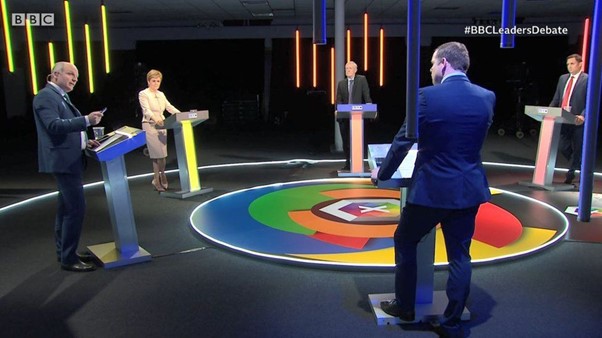
Party leaders debate ahead of the May 2021 Scottish Parliamentary election. Edinburgh, 4th May, 2021.

A lot of this was playing on my mind last month as I voted for the first time ever in the Scottish Parliamentary elections, and watched the SNP narrowly fall short of that essential majority at Holyrood. Boris Johnson, yet again, will surely take this as a sign that he can continue to reject Nicola Sturgeon’s requests for another independence referendum. But Westminster has already been trying that for too long, and I can promise that it won’t work much longer. To be fair, much unlike the World Cup, I don’t think anybody wants a referendum every four years—by now, we’re all pretty tired of this worn-out debate. But what I’m arguing is that another vote is inevitable. People’s identity, and genuinely feeling that they have sovereignty over their own affairs, rather than being controlled by a government from a distant English metropolis who doesn’t understand them, matters. That feeling of fundamental disconnection is not one that any amount of delaying and sidelining can have any long-term effect on—the argument of Scottish independence is as prevalent as it is permanent, no matter how much Westminster may pray that it might disappear if they ignore it enough.

Much like the beautiful game, Politics’ value comes from the fact that anyone can get involved and make a difference on the pitch. Remove that appeal, though, and people stop wanting to play—it ends up becoming a bit more like polo than football. If the people don’t believe in Britain, British politics simply won’t work anymore; even if it means trading the money and security of a stadium for the familiarity and chaos of a playpark, people would rather play a game they have control of. Scotland may have decided that the UK simply doesn’t provide that; no matter how much you deny, delay, or argue against it, we may have come too far for that schism ever to be healed. After all, football has never been about how many trophies the team wins, but about their genuine connection with the fans; for that, I know which match I’ll be watching on Monday.

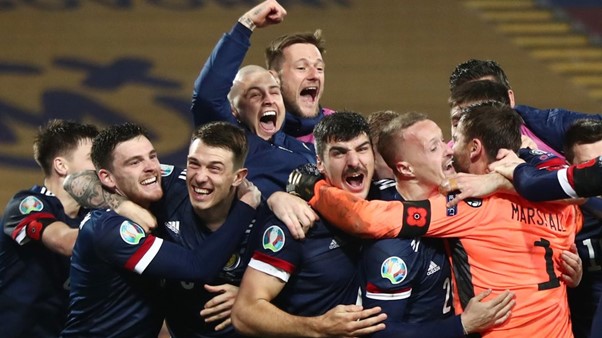
The Scotland Football team beat Serbia to qualify for the Euros for the first time in 23 years. Belgrade, 12th November, 2020.

References
Most of this one was done from my own experiences having spent a year (already!!) at university in Scotland. This article is a sort of tribute to that. I’d like to take this chance to thank everyone I’ve met along the way; I’ve learnt a lot, not just about Scottish independence, from the people I’ve met and the interactions I’ve had.
However, I picked up George Orwell’s Notes on Nationalism for £1 from Lighthouse lately, which was incredibly interesting and quite influential towards my writing of this piece (even if he takes a very different view on Nationalism and even sports throughout). You can pick it up in-store or from here (for a quid):
https://lighthousebookshop.com/book/9780241339565

Image references (in order of use):
https://www.mos.ru/en/news/item/58750073/
Taken and owned by me
https://www.bbc.co.uk/news/uk-scotland-scotland-politics-56986718
https://www.bbc.co.uk/sport/football/54853402

Categories
Featured Politics

On Equality

Almost one year ago, a 46-year old man walked into a store in Minneapolis and, while attempting to pay, was accused of using a counterfeit $20 bill. The police were called, and the man was arrested; 8 minutes and 46 seconds later, a full two minutes after he had become unresponsive, he was dead. Last week, the person who was kneeling on his neck faced trial.

Meanwhile, the UK has been ripped apart by the fallout from the release of the Sewell report on racial disparity; in case you (somehow) missed it, it controversially concluded that “we no longer see a Britain where the system is deliberately rigged against ethnic minorities”. To many, this was an affirmation of what they’d believed for a long time; that structural racial discrimination in the UK no longer exists, and that those who claim it does are selfishly inventing an issue where one doesn’t exist. To me, though, this report was the most direct possible highlight of everything that I think people fail to understand about the structural and institutional racism that pervades our lives.

Contrary to the investigation’s suggestions, I believe that in the West, racial equality is a myth—structural racism penetrates deep into our society and continues to have huge effects today, regardless of how far we’ve come in alleviating it. This piece is my attempt to back up that idea (from the point of view of a white guy who has benefited from the exact systems it outlines).

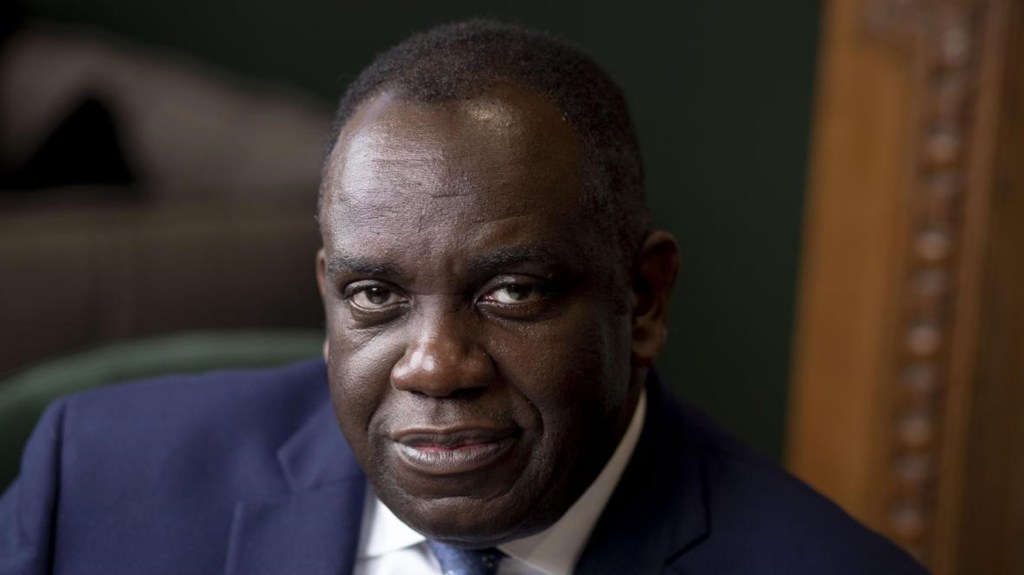
Tony Sewell, chair of the Commission on Race and Ethnic Disparities. London, April 1st, 2021.

Institutional racism is a deeply multifaceted issue, and getting into its full extent would take somebody who knows a lot more than me a lot more time than just one article. So, in the interest of brevity and providing an example of where the report goes wrong, let’s talk about one issue the investigation brings up: education and success.

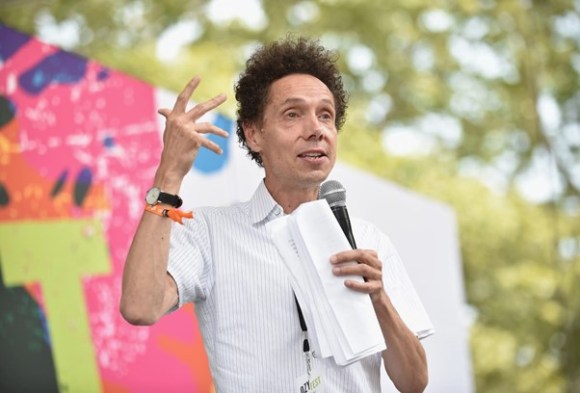
Over summer, a friend of mine recommended a book to me called “Outliers”, by Malcolm Gladwell; it’s a book that aims to explore the factors behind successful people, well, becoming successful. I really recommend reading it, but I’ll save you the time by cutting to its main finding: that success is about opportunity. More specifically, the only way that anybody ends up good at anything is by getting the opportunity to practice and become good at it. Across the book, Gladwell uses examples from Canadian ice hockey players to Bill Gates himself to show that the success of all of them was not determined by talent, but the opportunities they were provided from a young age. As he states in the conclusion to the book, success is “is not exceptional or mysterious. It is grounded in a web of advantages and inheritances, some deserved, some not, some earned, some just plain lucky”. The truth is that we don’t live in an egalitarian society; life is made incredibly easy for some (myself included) and incredibly difficult for others based on factors over which they have absolutely no control. This is a principle that I think can be applied across the human experience—the truth is, many of the things that you’ll be able to achieve are predetermined long before the day you are born.

Most of the people who maintain the idea that racial inequalities do not exist seem to parrot the exact same alternative narrative—that success is solely a result of hard work, and that if anyone works hard enough, their dreams are guaranteed. They laud figures such as Denzel Washington, who preaches that “hard work, works”*. They then extrapolate this to suggest that just because one person from a particular background can make it out and achieve amazing things, so can every single person from that background—and, according to them, those who fail to “make it” do so because they simply aren’t working hard enough.

Listen: in a lot of ways, this isn’t incorrect. Success definitively requires hard work; nobody with any number of ideal opportunities is going to get anywhere without putting pretty significant effort in. But how much work you actually have to put in, and how conducive that work is going to be to actual achievement, varies heavily depending on your individual situation. To harness that hard work, you need the right opportunities—who gets which opportunities, then, depends majorly on your background. It is true that in today’s UK, you’d be lying if you suggested that it were absolutely impossible for someone to do anything based upon their ethnicity (though we’re still waiting on a non-white Prime Minster; we’ll get there.) But think of it like a running race, in which some contestants start 50 metres ahead while others start behind, with hurdles and obstacles in their way—those who start behind could win, say, if those in front walk really slowly, but it’s going to be tough work. No matter how much you grind, life is still more or less a game of luck—succeeding isn’t guaranteed. And what is important is that for a middle-class white kid like me, the amount of better-quality advantages you receive in life (which you can harness to eventually become successful) is going to be so much more than the average kid from an ethnic minority background**—we start out in front, and the course is much more clear. For others, the opportunities they receive are more likely to be fewer and further between; this means they can still do well, sure, but the odds are much more heavily stacked against them.

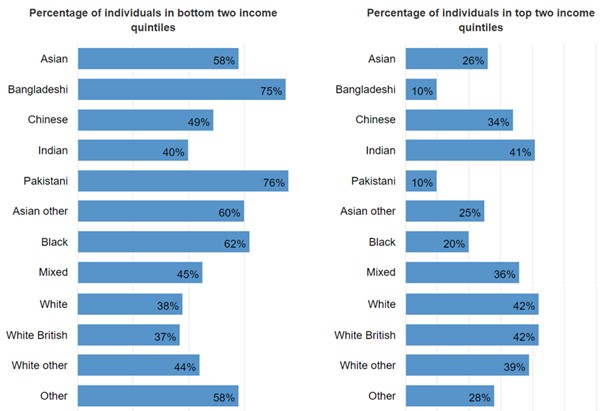
“But isn’t all of this more or less determined by class, not race?”, you might, pretty fairly, ask. Class definitely comes into it; indeed, regardless of race, the more money you have, the better your schooling, tech, extracurricular help, and even basic food provision can afford to be. Indeed, I reckon that most of the differences that I’ve outlined above can be put down to variation in class, not race (though other more subtle racial ones definitely do exist). But even if you ignore the other factors that affect education and futures and assume (pretty tenuously) that disparities in eventual affluence are totally explained by your socioeconomic position growing up, the blaring issue still stands that race is not accurately represented across classes. In the UK, white British people are easily the least likely ethnic group of all to be in the poorest income brackets, while the most likely to be in the richest:

UK Income distribution by ethnicity (after housing costs), April 2016-March 2019. Source: UK Government https://www.ethnicity-facts-figures.service.gov.uk/work-pay-and-benefits/pay-and-income/income-distribution/latest#by-ethnicity-after-housing-costs

People of colour are far more likely to be in those lower income brackets, receiving worse opportunities and therefore being set up to do less well than their white counterparts**. White people are more likely to live in richer areas with better schools (or just be able to pay for better schools), to have affluent parents with powerful contacts, and to get tutoring, internships, extracurricular funding, summer schools, textbooks, and everything in between. This social, economic and cultural safety net consists of the exact advantages that Gladwell is on about (and many of the ones that I have benefited from myself)—sure, you can be absolutely fine without them, but you’re going to need a hell of a lot of luck. I think that many people fail to recognise this key difference between the possibility and probability of success; just because we could, in theory, all achieve something, doesn’t make us all equally likely of being able to achieve it, and doesn’t make it fair (think back to my running race analogy from before).

Being poorer, as ethnic minorities are more likely to be, doesn’t make success impossible, just as being rich doesn’t guarantee it; we’ve all heard stories of rags to riches and spectacular falls from grace. But just because one person bucks the trend created by this disparity doesn’t mean that all of them can—the truth is, most of them don’t. And as the gaps between socioeconomic classes increase due to this biased system (which they definitively are; inequality is not getting any lesser in the UK), so do the gaps between races as disadvantaged people fight harder to get less far. This is just one single, very focused example of how our society is ruthlessly rigged against ethnic minorities; I haven’t even touched on other broad issues like policing, health, or even employment (though the latter is very linked to what I have explored). Nor have I gotten into how discrimination expresses itself within classes and schools, through indirect biases such as how students of ethnic minority backgrounds can be hit with disproportionate rates of disciplinary punishment—these are incredibly pressing issues that the government’s “landmark” investigation fails to properly investigate.

For its part, the Sewell report acknowledges the issues that affect educational achievement, including parental income levels and education, geography, and family structure, while asserting that socioeconomic status by far correlates the most strongly with attainment. I more or less agree with this breakdown of the issue; what the report then suggests to solve this, though, is simply the improvement of early-age state schooling. I think that this could definitely make up a lot of ground, but at the end of the day equalising your first few years of school simply isn’t enough to deal with structural societal inequalities. This solution only addresses what happens within the classroom, and ignores the fact that most of the difference expresses itself without, through background, extra support, etc. It also doesn’t get into the massive advantage that mostly-white private schools provide.

They’ve pretty much admitted that the root of the problem is socioeconomic status, and the misrepresentation of races in this respect. So, why aren’t we dealing with that? Why are we focusing on early-age education while upholding this inadequate hierarchy when we could be working to change that system as a whole? This rationale is more or less, I think, reflected across the entire report; though in many cases, it identifies the problems we’re facing with surprising lucidity, its recommendations of solutions repeatedly fall short of what is necessary. The thing is, until we start addressing the deep racial disparities that are actually behind all of the issues we’re debating, those issues will never really go away. Many hoped that the Sewell report would start addressing that by actually beginning to confront these problems; I, for one, was incredibly disappointed to see that it didn’t.

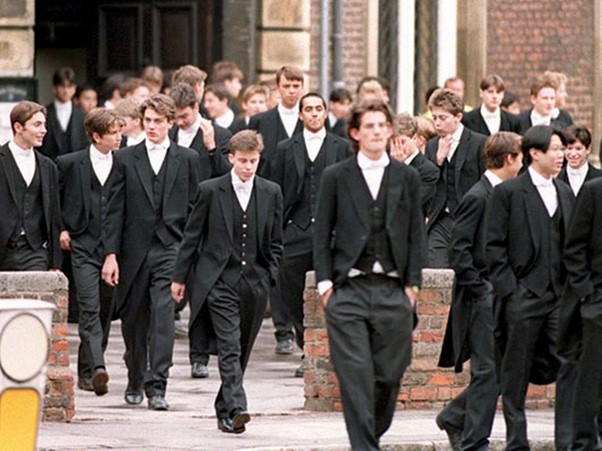
Students at Eton College. Eton, Windsor, February 7th, 2012.

For me, the death of George Floyd was a wake-up call to facing issues that, as a privileged white kid, I had never been privy to in the past—more than anything, it was a reminder of just how different others’ lives are to mine, and just how much I have left to learn and to understand. That’s what I’ve spent the last year attempting to do, and I’m still trying. I’m nowhere near fully getting it now (and I never will be), but I know that I’m a lot closer than I was. What worries me, though, is that there are still so many people who don’t try: who are happy to be complacent and deny just how rigged our society is, to pretend that the reason that individuals pass or fail, work the trading floor or the streets, and receive a warning or a knee to the neck is because of their own faults, and not because of a system that is structurally stacked against them.

Though the conviction of Floyd’s murderer might bring his family peace, it won’t truly bring him justice; he won’t receive that until we finally create a world in which no innocent person like him dies in the first place. What pains me is that with the way things seem right now, that reality is still a long way off.

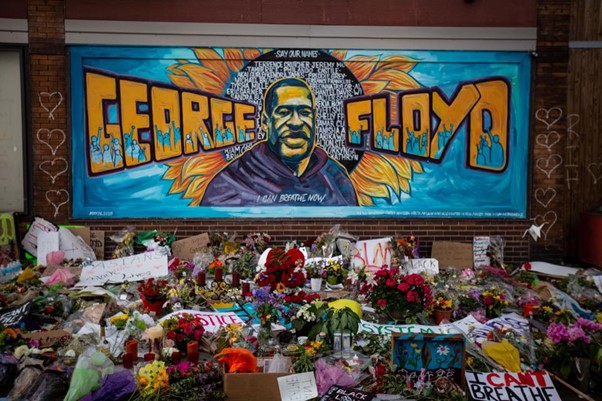
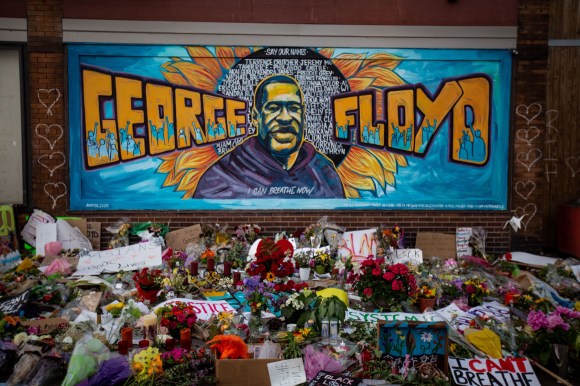
A memorial pays its respects to George Floyd, one week after his murder at the hands of a police officer. Minneapolis, MN, May 31st, 2020.


* I don’t at all think that Denzel doesn’t understand the issue, but I think that he is often misquoted and his ideas bent to fit a certain agenda.

** I am grouping all ethnic minorities together here as they are all at a disadvantage, but I want to make it clear that the difficulties that ethnic groups face are by no means homogenous and should not be unnecessarily generalised. Every individual’s, and every group’s, experience is complex and unique and should be treated entirely as such.

References
A lot of this one was again fuelled by my own thought, along with hours of conversations on the issue with people in-person and over the internet; this piece is my best attempt to put my point of view on it forwards in the most comprehensive way possible. This is the article I wish I could have read aged sixteen (when I really didn’t get it at all).
However, here are a couple books I’ve read that really influenced my thinking here (from Edinburgh-based independent bookstores, of course):
Outliers by Malcolm Gladwell:
https://www.toppingbooks.co.uk/books/malcolm-gladwell/outliers/9780141036250/
(This is also a good criticism of Gladwell’s writing that is important to bear in mind: https://medium.com/@tomnew/how-malcolm-gladwell-writes-12960d83575c)
Why I’m No Longer Talking to White People About Race by Reni Eddo-Lodge (a really important read even if you disagree with me and everything this book stands for, as it explains this side of the argument really well):
https://lighthousebookshop.com/products/9781408870587?_pos=1&_sid=7ce713792&_ss=r
I’ll also repost the UK Government statistics page from which I took the graph above:
https://www.ethnicity-facts-figures.service.gov.uk/work-pay-and-benefits/pay-and-income/income-distribution/latest#by-ethnicity-after-housing-costs

Image sources (in order of use):
https://www.thetimes.co.uk/article/anger-slave-claims-race-review-bame-equality-wlpsk6hgv
https://medium.com/@tomnew/how-malcolm-gladwell-writes-12960d83575c
https://www.fearlessmotivation.com/2018/09/23/denzel-washington-speech/
https://www.ethnicity-facts-figures.service.gov.uk/work-pay-and-benefits/pay-and-income/income-distribution/latest#by-ethnicity-after-housing-costs
https://www.mirror.co.uk/news/uk-news/britains-poshest-school-eton-paying-147911
https://www.forbes.com/sites/nadjasayej/2020/06/04/the-story-behind-the-mural-at-the-george-floyd-memorial/?sh=1ed3976827f1
None of these images are owned by me, and I make no financial gain from their use. All credit goes to their original owners.

Categories
Alex Featured

19

Today, I turn nineteen.

It isn’t a particularly important age for most people, I imagine; the afterburn of an eighteenth year full of change, from school to the real world (or halfway there, at least), from a child to something resembling an adult. I guess that turning this age also holds a lot of that for me—more than anything, Covid has led to this year being an even harsher cacophony of ups and downs, often in quick succession, and my birthday marks nearly a year since it all started. In my case, though, nineteen holds a certain significance. To explain that, I’ll need to tell a story about a friend of mine.

Lyon House, 12/02/2019.

A lot of you will know his name, but that’s not important: for the purposes of this, I’ll just call him J. By all means, I never actually knew J very well; when I joined my senior school aged thirteen, he was in his final year there. He seemed to have everything: he was Head Boy, captain of the school’s first-ever undefeated rugby team, and a living legend around campus. But what always stuck out to me was how despite all of his achievements, he was incredibly humble and down-to-earth—seeing him daily in our close-knit boarding house, he would never look down on us, the youngest in school (as most older kids, out of pride or perhaps insecurity, tended to). Sure, we never felt like equals, exactly, but more importantly he made us feel like we mattered; knowing he’d been at the forefront of pushing greater mental health awareness in school over the years, we all knew that if we ever had a problem, he would always be there to listen.

My memories of the guy are mostly pretty positive: I remember watching him charge down the rugby pitch in the final match of the season, fearlessly acting as an Eastern European maid in our house play (though the cast’s abilities were questionable, you will never see as many penis jokes in a single 90 minutes in your entire life) and screaming at the latest twist on Game of Thrones on a Monday night. As a kid, I never really got to see the other side of him: I am not sure that many did (though looking back, most of our house, at least, seemed to somewhat know). Hearing about his death, then, came to me as an incredible shock.

It’s as if it were last week, or maybe a month ago: the afternoon remains crystal clear, imprinted in my mind. It had been announced in the morning that the whole school was meant to meet later in the day: which, for a Thursday, happened to be pretty odd. I knew it was serious, obviously (this kind of thing hasn’t occurred before or since), but had absolutely no idea what was coming. At athletics that afternoon, I discussed the affair with my mates while (pretending to be) training our triple jump in the lazy, English summer sun: we decided another friend of ours had probably been busted for drugs (he’d been searched that morning and, turns out, had somehow managed to get away with it). Nonetheless, we thought, a whole school meeting would be a bit overkill, and so nobody was really sure what was going on—we should have taken the news that one of his teachers had been seen in tears that morning as a warning sign.

An ominous mood hung over the school as the Headmaster stood up to speak. He kept it brief: he announced that earlier that morning, he had heard of J’s death while on a gap year in Vietnam. He didn’t tell us how it happened: my naïve, fifteen-year-old mind wouldn’t fill that bit in until later. While I don’t recall his exact words, I can still feel the punch to the gut that I sensed the whole room, especially our house, most of whom had been living with him less than a year before, take as the news hit us; I remember the eerily silent, ten-minute walk back to our boarding house, as sixty boys tried to come to terms with their friend’s death; and I remember us getting back, collapsing onto the various benches that had been assembled outside to greet us, and crying, unable to believe that someone we looked up to and cared about like a brother could be so suddenly and unexpectedly gone.

He was nineteen years old.

Lyon House, 27/5/2016.

I mentioned before that me and J didn’t have a very close relationship. Given our ages, that was inevitable, really; while being in his house meant I knew him better than most, it’s not like we were best mates. What he did represent for me, though, was a role model. When he was at my school and in the years after he left, I looked up to him immensely; when I was that age, I thought, I wanted to be something like him. Sure, I never made Head Boy, and I was nowhere near captaining any rugby teams (never mind an undefeated season). But before and especially after what happened I was always determined to, if nothing else, try to live up to the way he inspired me, and instil that same inspiration in the kids who came after me. Because more tragic than the fact that I knew he would never be able to play another game of rugby, or see the end of Game of Thrones (although that was almost definitely for the best), was the fact that his memory would one day fade. I wanted to be a part of keeping it alive somehow, even if indirectly.

Looking up at J aged thirteen, I saw someone with the world at his feet. At nineteen, I feel just about as directionless now as I did then and I’m sure he felt nearly 4 years ago. But what’s changed is that we finally are, in a way, equals; today will be as close as I’ll ever get to seeing the world through his eyes. And in that respect, I think that my vision of his story, too, needs to change. After all, I’ve grown out of my school: my time at university has already had a huge effect on me, and starting to grow up has given me the chance to take a new perspective on the childhood I’ve left behind. Maybe now, the best way to keep his memory alive is not within some tiny country school, but beyond, in the world, by trying to change what led to his tragedy in the first place. By encouraging conversations about mental health. By deconstructing the toxic masculinity behind the struggles of him and those close to him in accepting his sexuality. By reminding people that any life, especially one as bright and inspirational as his, never deserves to be thrown away. While that’s a big ask, one I could dedicate my entire life to and still not achieve, making a difference starts with the small things; I guess that this piece is one of those.

Today I turn nineteen, and as I grow older, I realise that his is a story that I don’t need to hide behind anymore (people who have known me long enough are sick and tired of it, at this point). Nineteen is where his story ended. But mine hasn’t: I am determined to make it a force for good, in the memory of him and so many, too many, other victims of male suicide. Being a man is more than simply masculinity: looking back, I see that J carried that message, from the rugby field to the boarding house to the stage and beyond, and if nothing else, he passed it on to me. I intend to live by it. If you’ve made it this far, the most important step that any of us can take is simply to check on your mates. We, I, don’t do it enough; it’s always “what’s going on?” and never really “how are you?” And even if they’re fine, I promise that even being asked can make a world of difference—knowing someone cares about your problems does so much to lighten their load. Again, it starts with the small things; but if we can change even one person’s day for the better, every day, it stacks up. When you feel totally alone in the world, the reminder that even one other person is there with you can be all that you need.

Like all of us, J faced many challenges in his life; though he responded to all of them valiantly, in the end it was the battles inside of him that became too much to bear. I can never fully understand, but today marks the closest I’ll ever get to it—I want his memory to help me make change, however small. And I know that if I, or you, can make a difference in at least one story like his, he will be looking down with pride.

Lyon House, 10/06/2016.

“If”

If you can keep your head when all about you   

    Are losing theirs and blaming it on you,   

If you can trust yourself when all men doubt you,

    But make allowance for their doubting too;   

If you can wait and not be tired by waiting,

    Or being lied about, don’t deal in lies,

Or being hated, don’t give way to hating,

    And yet don’t look too good, nor talk too wise:

If you can dream—and not make dreams your master;   

    If you can think—and not make thoughts your aim;   

If you can meet with Triumph and Disaster

    And treat those two impostors just the same;   

If you can bear to hear the truth you’ve spoken

    Twisted by knaves to make a trap for fools,

Or watch the things you gave your life to, broken,

    And stoop and build ’em up with worn-out tools:

If you can make one heap of all your winnings

    And risk it on one turn of pitch-and-toss,

And lose, and start again at your beginnings

    And never breathe a word about your loss;

If you can force your heart and nerve and sinew

    To serve your turn long after they are gone,   

And so hold on when there is nothing in you

    Except the Will which says to them: ‘Hold on!’

If you can talk with crowds and keep your virtue,   

    Or walk with Kings—nor lose the common touch,

If neither foes nor loving friends can hurt you,

    If all men count with you, but none too much;

If you can fill the unforgiving minute

    With sixty seconds’ worth of distance run,   

Yours is the Earth and everything that’s in it,   

    And—which is more—you’ll be a Man, my son!

-Rudyard Kipling

Images
All images used are from the King’s Bruton Flickr, where they can still be accessed:
https://www.flickr.com/photos/kingsbruton/
Though they feature my likeness (go have a look if you missed me), they are not owned by me. All credit goes to King’s, their rightful owner.
Categories
Featured Politics

America- Divided Against Itself

Abraham Lincoln famously quipped that “A House divided against itself, cannot stand”. Though these words were addressed to an 1800s America on the brink of Civil War, their message is applicable all across history: a timeless reminder that fundamental differences between allies can destroy even the most valiant institutions and movements from within.

A poignant example of this is the Spanish Civil War, which raged from 1936 through until 1939, ending just as the rest of Europe erupted into chaos with the outbreak of World War II. Spain, since the exile of its king in 1931, had become a democratic republic: it championed values such as suffrage, divorce, gender equality, and freedom of religion, all of which were controversially progressive issues for a country that even today is still deeply devoted to its traditional Catholic roots. Even these five years, then, were plagued by bitter political battles between the progressive left and the traditionalist right, as well as spats within each camp between those in support of republic and people wanting to tear it down, whether that be Christian monarchists or radical anarchists. This period of tension, subterfuge and backstabbing eventually concluded with the army’s right-wing generals launching an invasion of southern Spain, plunging the country into a Civil War.

The lines of this war were quickly and decisively drawn. There were “Nationalists”, people in support of the rebels’ leader, General Francisco Franco, and his fascist invading forces, and “Republicans”, which were pretty much everyone else: an alliance of everyone from moderates who simply preferred democracy to fascism, to socialists, to all-out anarchists, who just hated Franco more than they disliked the moderate Republic. While this uneasy alliance, borne out of hatred of their shared enemy, lasted about a year, by 1937 in-fighting began: extremists and moderates began to attack each other in the infamous “May days”, leaving the entire alliance vulnerable to the more unified, aggressive and focused Nationalist forces, who took advantage of the chaos to gain the upper hand in the war. The Republicans never recovered, and lost their stronghold of Madrid in March 1939, letting in nearly forty years of brutal dictatorship.

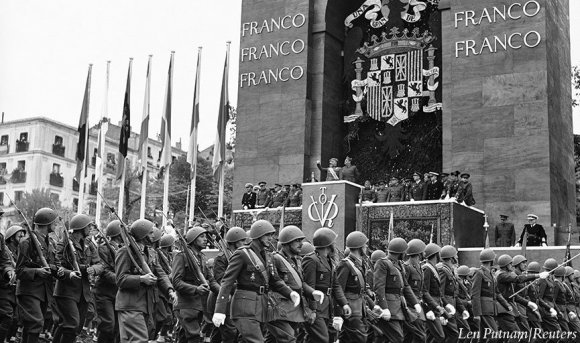
Francisco Franco celebrates his victory in the Spanish Civil War. Madrid, March 28th, 1939.

I think there are important lessons we can learn from this example, many of which are particularly relevant in today’s US. The truth is, like the (Spanish) Republicans, the current American Democratic party is an incredibly unlikely alliance: for the past 4 years, it has shown surprising cohesion as the “anything but Donald Trump” wing of the American political spectrum. Trump himself, on the other hand, is no match for Franco’s extremism and brutality—nonetheless, his recent denial of the legitimate results of the 2020 Presidential election only reinforces his long-standing opposition to democracy if it does not work in his favour, much like the 1930s Spanish right wing. And while, like in Spain, this shared enemy of democracy may temporarily unite two disparate viewpoints to oppose it, I think that the party, and President Joe Biden at the head of it, are going to face the mounting challenge of keeping the organisation together as time drags on.

Kamala Harris and Joe Biden celebrate their victory in the 2020 US Presidential Election. Wilmington, Delaware, November 7th, 2020.

Over 81 million Americans voted for Joe Biden: more than in any other election in the nation’s history. This, in itself, is a staggering figure which only highlights the importance of last year’s election. In the world’s most diverse nation, this group obviously consisted of a wide range of demographics: people of all ages, genders, races and backgrounds stepped up to vote, many for the first time. The victory they achieved was massive both in terms of sheer numbers and significance, and pushed Biden over his first hurdle to become the 46th President of the US. However, it only represented the first of his many challenges: more than anything now, it emphasises the weight of the unique hopes of those millions of individuals, all of which now rest on his shoulders.

Biden has already taken further steps by winning a majority in the US Senate. Unlike the UK, where the Prime Minister is simply appointed by the biggest party in Parliament, which is elected at once, America has separate elections for both the Senate and the House (think of these as almost like the House of Commons and the House of Lords, but both have important powers) as well as an entirely different one for the President, which is what we saw in November. While the approval of all three is needed to pass major legislation, it is possible for a President to have control of only one of these or even to have neither, as Obama faced later on in his Presidency—this means their opponents can stop almost anything they do. The good news is that while the world was watching Trump-supporting extremists storm the Capitol a week ago, the Democrats quietly won two Senate seats back from Republicans in special elections in Georgia, securing (barely) a majority for Biden when he is inaugurated on top of his control of the House; this means the President will actually be able to effectively pass laws through the Houses without the Republicans entirely blocking everything.

Joe Biden campaigning with Jon Ossoff and Raphael Warnock, the two recently-elected Senators from Georgia. Atlanta, January 4th, 2021.

However, the battle nowhere near done—the new President still faces the crucial issue of keeping his party together, on top of running a whole country, down the line. Even after the races in Georgia, the Senate will be perfectly split 50-50 (with the Vice-President having the deciding vote): if even one Democrat decides to vote against him, he won’t be able to pass anything into law. In his new autobiography, “A Promised Land” (which I really recommend if you want to learn about American politics; it’s teaching me a lot), Barack Obama highlights the difficulties of this situation. The knife-edge majority grants every Democratic Senator a huge amount of bargaining power, allowing them to force any law Biden tries to pass to change, stopping it in its tracks by voting against it if he doesn’t listen to their demands. This presented huge issues for Obama who, even though he had a bigger majority than Biden does now, had to bend over backwards to ridiculous personal requests in order to pass anything at all, taking huge shortcuts such as extra billion-dollar projects in Louisiana to deliver his landmark healthcare bill, for example. The new President will face all of the same issues that Obama did: even so, I think that the fallout from having to concede to these demands may be greater than ever, effectively threatening to divide the party in two.

Americans gather around a radio at the Lincoln Memorial to listen as Barack Obama wins his first Presidential election (Obama remarks in “A Promised Land” that this is his favourite image from the night). Washington, D.C., November 4th, 2008.

The Democratic Party is split between two blocs: “moderates”, who are less harsh right-wingers looking to keep continuity in the US (think UK Tories but mixed with Lib Dems), and “progressives”, who push for greater government investment and change (more like Labour). This important rift, while having been swept under the rug for years in order to deal with Trump, is once again beginning to rear its head now that the Democrats once again have control of government. Biden and his future Vice-President, Kamala Harris, mostly fall into the former camp, while figures such as Bernie Sanders and Alexandria Ocasio-Cortez are more prominent leaders of the latter. Progressives, though, were instrumental in securing Biden’s win—led by Bernie after his defeat and young campaigners on social media, they began a mighty push to “settle for Biden”, throwing their support behind him solely in order to kick out Trump—Biden, too, rose to their demands, for example on cancelling student loan debt, knowing that he had to count on their support to win. And, he has: but now that aim has been achieved, the atmosphere amongst progressives is beginning to change from support to suspicion. Biden’s cabinet nominations are showing many more play-it-safe moderate figures than progressive torchbearers, causing many voters to be disappointed, indicating that there may already be a marked difference between Biden’s agenda and that which many progressives, both voters and politicians, were hoping for. The cracks, then, may already be beginning to show.

What does any of this mean? I am worried that like in 1930s Spain, the differences between the Democrats could spell disaster for them. The fact that any of the fifty Democratic senators could single-handedly stop a law from passing will mean that any of them could make pretty much any request they wanted: but what happens when a moderate makes a demand that progressives don’t like? Or vice versa? Such arguments are bound to happen, and I think they may well tear the party apart, causing either half to entirely veto legislation made by their own official allies. Meanwhile, the Republicans will surely be waiting on the sidelines, spying weaknesses to exploit during future elections in 2022 and 2024. If the Democrats can’t reconcile their differences, I don’t see their grip on power lasting long.

Mark Twain, Lincoln’s contemporary, told us that “History doesn’t repeat itself, but it often rhymes”. The Spanish Civil War was fought over 80 years ago and in entirely different circumstances, but the principles at stake were mostly the same as in modern America: those who are driven to defend democracy pushing back those who are desperate to bend it to their will. And while we might think that if anywhere, democracy is safe in the Land of the Free, the 6th of January taught us that we should take nothing for granted (especially when the police and even the President support the aggressors). Joe Biden may yet face some of the toughest challenges of any President in recent memory: we will all be counting on him to overcome them.

Rioters storm the US Government at Capitol Hill in protest of the results of the 2020 Presidential Election. Washington, D.C., January 6th, 2021.

References
Most of this piece was done from my own knowledge, but there are a few articles out there touching on similar themes:
https://www.theguardian.com/us-news/2020/nov/15/democrats-divided-joe-biden-election-party
https://www.nytimes.com/2020/11/09/us/politics/democratic-party-joe-biden.html
https://fivethirtyeight.com/features/the-issues-that-divide-people-within-each-party/
Also, if any of this interested you at all, read A Promised Land. Even if you don’t like Obama (I’m hardly his hugest fan), it offers an illuminating account into American and world politics from someone who was at the centre of it all (and actually knew what was going on, unlike more recent Presidents). Here is a link to it from my favourite independent bookshop here in Edinburgh, because fuck Amazon:
https://lighthousebookshop.com/products/a-promised-land-obama?_pos=1&_sid=c9c3f1d91&_ss=r

Image sources, in order of appearance (all credit goes to their rightful owners):
https://twitter.com/cfr_org/status/714464591384821760
https://www.ocregister.com/2020/11/07/ap-says-joe-biden-has-won-presidential-race-as-trump-continues-challenges/
https://www.wsbtv.com/news/politics/president-elect-biden-congratulates-warnock-ossoff-record-turnout-georgia/4IGI3R3P6FHLXABG3FGD3SP62Q/
https://mattmendelsohnphotography.pic-time.com/art/mattmendelsohnartgallery/5f5283602405c10b4473d61e
https://www.rappler.com/world/us-canada/summary-trump-statements-inviting-supporters-join-rally-united-states-capitol-january-2021

Categories
Featured Politics

Uighur crisis- Déjà Vu

Subscribe to continue reading

Subscribe to get access to the rest of this post and other subscriber-only content.

Categories
Featured Politics

Hong Kong-A Tale of Two Cities

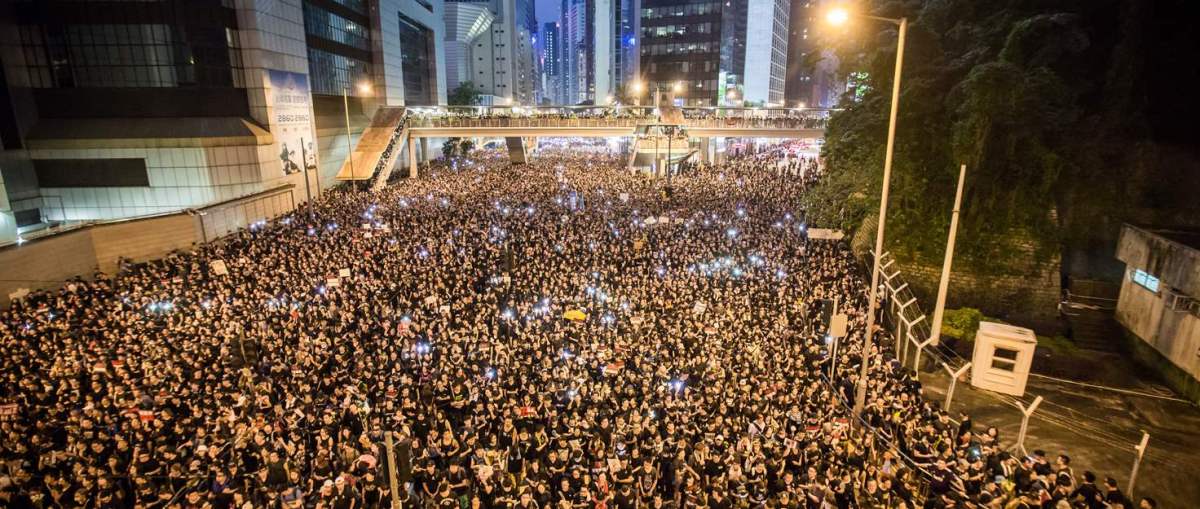
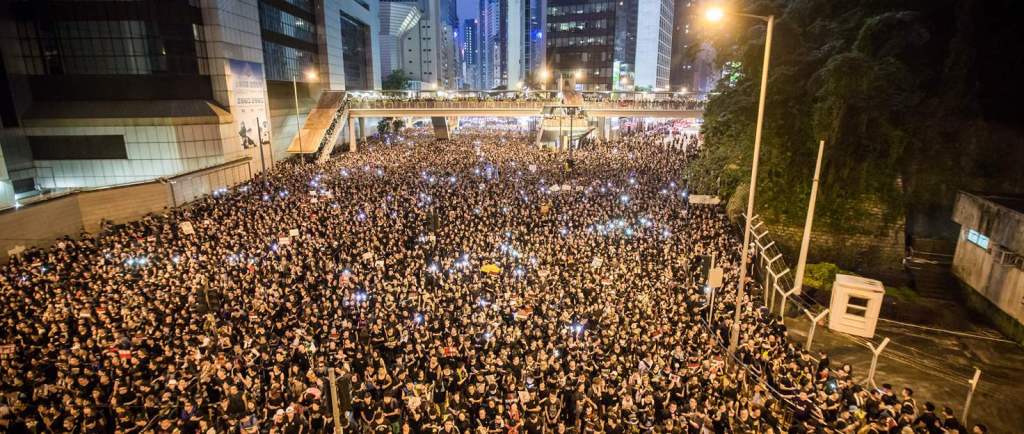
The situation in Hong Kong is as serious as it is difficult. Millions of protesters line the streets and fill the universities, in outcry against the Chinese dictatorship. Their demands are, for the most part, reasonable; they want withdrawal of Carrie Lam’s proposed extradition bill, which would have Hong Kong prisoners sent to China at Beijing’s request, an independent investigation into the reported police brutality, involving outright beatings, gassings and alleged gang-rape of unarmed innocents and, most essentially yet controversially, real democracy and free elections. For some, they will stop at nothing until this vital request is fulfilled.

There have been many comparisons, notably by leading activist Joshua Wong in his visit to Germany, that Hong Kong is “the new Berlin” of my generation’s Cold War. The problems faced are, indeed, similar; a pro-democracy movement protesting the oppression of the totalitarian dictatorship it is forced to live under, and that dictatorship attempting to crush it into the ground. Hong Kong has a clear parallel with Berlin in that it is the semi-free link between China’s iron firewall and the outside world; this, combined with its slowly eroding “one country, two systems” status, fuels revolutionary attitudes in a strikingly similar fashion to how it did in Berlin. Perhaps, as happened 30 years ago, these protesters could start a nationwide movement to free China from the grips of its communist rulers; yet, the likelihood of this outcome seems to lessen and lessen with every Chinese response.

The protesters in Berlin were, undoubtedly, lucky; rather than being faced with the consequences of defiance, they were met with support from the Russian dictator, Mikhail Gorbachev; he went on to not only liberate Berlin but all of Eastern Europe from the clutches of the USSR and its puppets. But Xi Jinping is no Gorbachev, and Hong Kong no Berlin. In Europe, communism was all but finished; despite their planning, coordination and cooperation, the Soviets had not truly rivalled the Western states economically, and though they used terror tactics, and propaganda, to fully permeate every part of their people’s lives, they still did not fully embrace communism. After 40 years, Gorbachev realised that communism had failed; when the uprisings began, he embraced them. In China, the exact opposite has happened; economic performance is unprecedented, and I have seen first-hand the unquestioned control that the CCP holds over the hearts and minds of the Chinese people. They, like those who dare oppose them, are unyielding in their demands.

Hong Kong is, I fear, much more like Belfast, where I lived as a child, than Berlin. Both the so-called liberators and rulers are growing in violence as tension rises and no side seems willing to give. The students filling the universities, crying for freedom from China, seem only too similar to the youths who founded the IRA in the 1970s and set out to deliver Northern Ireland from British control. I felt the echoes the of bitter, bloody street fighting that ensued whenever I visited the city, conscious to hide any sense of Englishness lest an impassioned Republican notice. The war in Ireland never truly ended, rather reached a bitter stalemate; the standard-bearers of the IRA continue their fight politically in the halls of Stormont, rather than violently in the streets that surround it. What I am sure of is that Hong Kong’s freedom fighters will receive no such opportunity, and, if they press too hard, that China’s retaliation will know no limits. If the ripples of a conflict such as the Troubles can still be felt in Belfast today, I fear for the escalation of its new sister.

Maybe Hong Kong is not Berlin or Belfast, but its own story entirely; it will certainly make for a significant tale and its inhabitants, those who tried to fight the most powerful regime in human history, made an example of—for better or for worse. Whether today’s protesters reach freedom as in Berlin, grind to a violent stalemate as in Belfast or meet another end entirely at the end of Xi Jinping’s wrath, their memory will separate a city, a nation and a planet for years to come.

References

Joshua Wong on Berlin:

https://www.reuters.com/article/us-hongkong-protests-germany/my-town-is-the-new-cold-wars-berlin-hong-kong-activist-joshua-wong-idUSKCN1VU0X4

I’d had the idea for this article a couple months ago, but several people had beaten me to writing similar stuff. Here are some of my favourites:

https://yaleglobal.yale.edu/content/could-hong-kong-become-belfast

https://thediplomat.com/2019/11/hong-kong-the-new-berlin-wall/